Best noise-cancelling headphones in 2026
We compared eight current wireless noise-cancelling headphones on manufacturer specifications and published reviews, and explain what to check before you buy.
RoxMag may earn a commission if you buy through the links on this page, at no extra cost to you. It never changes our picks. How we choose.
Noise cancelling performance starts with the seal, not the electronics. SoundGuys measured the Bose QuietComfort Headphones (2nd Gen) cutting loudness by 85.1 percent with ANC on, against 71.9 percent from the ear cups alone, so active processing adds to passive isolation rather than replacing it. Glasses can break that seal on the Sony WH-1000XM6, making low-frequency reduction less predictable. Phone choice also matters: iPhones cap you at SBC and AAC, while LDAC and aptX need a supporting Android handset. Battery figures shift with settings, as the Beats Studio Pro shows at 40 hours with ANC off and 24 with it on.
This guide to the best noise cancelling headphones compares eight models across overall performance, iPhone use, sound quality, travel, battery life, mid-range and budget value, and home working. It covers wired USB-C audio, which the Bose QuietComfort Headphones (2nd Gen) supports at up to 24-bit/48 kHz, and multipoint limits such as the AirPods Max 2 pairing only with compatible Apple devices. RoxMag compares specifications and published reviews and does not hands-on test.
Our top picks
| # | Pick | Best for |
|---|---|---|
| 1 | Bose QuietComfort Ultra Headphones (2nd Gen)Best overall | Frequent flyers who want top noise cancelling |
| 2 | Apple AirPods Max 2Best for iPhone users | Apple device owners wanting lossless wired audio |
| 3 | Bowers & Wilkins Px7 S3Best sound quality | Listeners who put sound quality first |
| 4 | Sony WH-1000XM6Best for travel | Travellers who want strong ANC and clear calls |
| 5 | Sennheiser MOMENTUM 5 WirelessBest battery life | Long-haul users who rarely want to charge |
| 6 | Bose QuietComfort Headphones (2nd Gen)Best mid-range | Commuters wanting Bose ANC for less |
| 7 | Anker Soundcore Space 2Best budget | Budget buyers wanting marathon battery life |
| 8 | Beats Studio ProBest for working from home | Home workers who need clear calls and USB audio |
Bose QuietComfort Ultra Headphones (2nd Gen)
Best for: Frequent flyers who want top noise cancelling
Bose's second-generation QuietComfort Ultra earns our Best overall label for travellers who put noise cancelling first. Engadget rates its ANC as the strongest available and notes clear gains over the first model in audio quality and stamina, while the 30-hour battery and 15-minute top-up for 3 hours of playback suit long trips. ActiveSense softens abrupt shifts in surrounding sound, USB-C carries lossless audio, and the earcups fold for packing. Five listening modes plus adjustable ANC give fine control over how much of the cabin you hear.
What we like
- Engadget names it the top overall pick for noise cancelling, with ANC that beats the earlier version and better sound and endurance.
- ActiveSense eases abrupt swings in background noise, lossless playback runs over USB-C, and the design folds for travel.
- Battery runs 30 hours, and a 15-minute charge adds 3 hours of listening.
Trade-offs
- SoundGuys calls the in-app EQ limited and points out the lack of any water or dust protection, ruling out wet weather and exercise.
- Engadget flags the steep price and the glossy surface as downsides.
Key specifications
| Battery life | 30 hours |
|---|---|
| Quick charge | 15 min = 3 hrs |
| Bluetooth version | 5.4 |
| Listening modes | Quiet, Aware, Immersion, Cinema, Off ANC settings |
| Noise control type | Adjustable Noise Cancelling, Active Noise Cancelling, Echo Reduction |
| Wired and USB audio | Over USB-C, receives audio at 16-bit, 44.1kHz or 48kHz |
| Included cables | 3.5 mm to 2.5 mm audio cable and USB-C (C to C) cable |
| Weight (headphone only) | 0.583 lb |
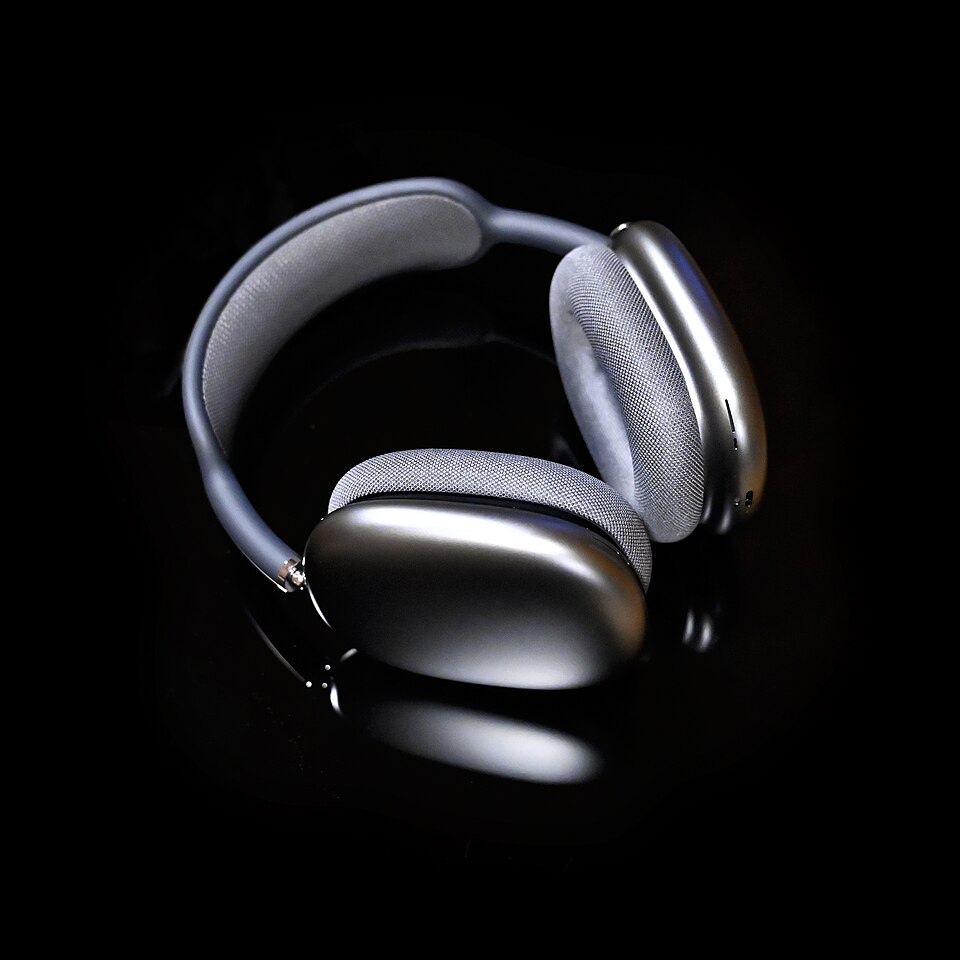
Photo: SimonWaldherr, CC BY-SA 4.0, Wikimedia Commons
Apple AirPods Max 2
Best for: Apple device owners wanting lossless wired audio
The AirPods Max 2 earns its label because Apple's ecosystem features work best here. Each ear cup carries an H2 chip, and the USB-C port handles charging plus a wired link that delivers lossless audio up to 24-bit/48kHz and low latency, with a Game Mode for Mac, iPhone and iPad. SoundGuys found the noise cancelling strong and slightly ahead of the original in the midrange. Buyers outside Apple's world lose multipoint and face SBC and AAC codecs only.
What we like
- Wired USB-C playback supports lossless audio to 24-bit/48kHz and low latency, and a Game Mode covers Mac, iPhone and iPad.
- SoundGuys measured noise cancelling that is strong and competitive with other flagships, a small step up from the first model in the midrange.
- Personalized Spatial Audio with dynamic head tracking adds head-tracked immersion for Apple device owners.
Trade-offs
- At 386.2 g with firm clamping force, long listening sessions can become tiring.
- Bluetooth is limited to SBC and AAC, and multipoint pairing requires Apple devices.
- The design carries over from the 2020 model and the 20 hour battery rating with ANC on is unchanged, behind many rivals.
Key specifications
| Chip | Apple H2 headphone chip, one in each ear cup |
|---|---|
| Active Noise Cancellation | Up to 1.5x more Active Noise Cancellation than the previous generation |
| Microphones | Nine total; eight handle ANC and three handle voice pickup |
| Battery | Up to 20 hours of listening with ANC on |
| Connector | USB-C for charging and a wired connection with lossless and ultra-low-latency audio |
| Bluetooth | 5.3 |
| Weight | 13.6 oz (386.2 g) |
| Spatial Audio | Personalized Spatial Audio with dynamic head tracking |
Bowers & Wilkins Px7 S3
Best for: Listeners who put sound quality first
The Px7 S3 earns our sound quality label because its hardware and tuning are aimed squarely at fidelity. Two 40mm bio-cellulose drivers sit behind Bluetooth 5.3 with aptX Lossless, and a USB-C cable feeds audio through the on-board converter for wired lossless playback. Engadget picked it as the best-sounding option in its roundup, citing a comfortable fit and refined build. SoundGuys measured solid suppression of the lowest frequencies. A five-band equaliser and TrueSound mode let you shape the response.
What we like
- Engadget's noise-cancelling roundup ranks it top for audio quality, and also praises the comfortable fit and clean design.
- Wired playback runs through the internal digital-to-analogue converter, and SoundGuys recorded good isolation from deep bass.
Trade-offs
- The controls are placed awkwardly, extras are sparse, and the adaptive noise cancelling cannot be adjusted.
- SoundGuys calls the default tuning unusual and the equaliser choices narrow, and the earcups do not fold.
Key specifications
| Drivers | 2 x 40mm dynamic full range bio cellulose driver |
|---|---|
| Battery | 30 hours playback, 7 hours with a 15 min charge |
| Bluetooth | Bluetooth 5.3 with aptX Lossless technology |
| Bluetooth codecs | aptX Lossless, aptX Adaptive, aptX HD, aptX Classic, AAC, SBC |
| Weight | Net weight 300g (without carry case) |
| Microphones | 8 mics total, 4 mics per earcup |
| Wired | 1.2m USB-C to 3.5mm stereo jack audio cable |
| USB audio | USB-C charging & audio interface |
Sony WH-1000XM6
Best for: Travellers who want strong ANC and clear calls
The WH-1000XM6 earns our travel pick because its noise cancelling and call handling suit long journeys. SoundGuys measured the QN3 processor reducing outside loudness by about 89 percent, a better result than the Momentum 5, and found its 12 microphones keep voices clearer against wind and traffic. Battery runs up to 30 hours with ANC on, and the 254 g frame supports multipoint pairing. Bluetooth 5.3 covers SBC, AAC, LDAC and LC3, with a 3.5 mm cable for wired listening.
What we like
- SoundGuys lab data shows roughly 89 percent less outside noise, ahead of the Momentum 5.
- Its microphones isolate speech from wind and street sounds more effectively than the rival model in SoundGuys' comparison.
- Up to 30 hours of playback with noise cancelling active, plus multipoint for switching between devices.
Trade-offs
- Wired playback is analog only via the included 3.5 mm cable, with no USB-C audio.
- No IP rating, so the headphones are not rated for moisture or dust.
- Engadget says Speak-to-Chat still needs refinement and calls struggle in noisy surroundings.
Key specifications
| Bluetooth | 5.3 |
|---|---|
| Bluetooth codecs | SBC, AAC, LDAC, LC3 |
| Battery life with ANC on | Up to 30 hours |
| Weight | 254 g |
| Noise cancelling processor | QN3 |
| Microphones | 12 |
| Multipoint | Yes |
| Wired audio | 3.5 mm cable included; no USB-C audio |
Sennheiser MOMENTUM 5 Wireless
Best for: Long-haul users who rarely want to charge
The Momentum 5 Wireless earns our battery label because Sennheiser rates it for as much as 57 hours with noise cancellation running, and a 10 minute top-up is quoted at up to 7 hours. The 700 mAh lithium-ion cells can be swapped by the owner after removing four screws on the left cup, and the companion app can stop charging at 80 percent to slow wear. SoundGuys also recorded an average 86 percent drop in outside noise, helped by eight microphones.
What we like
- User-swappable 700 mAh batteries sit behind four screws in the left ear cup, and the app offers an 80 percent charge limit.
- SoundGuys measured roughly 86 percent average outside-noise reduction, up from 76 percent on the Momentum 4, with eight mics rather than four.
- Sennheiser quotes up to 7 hours of playback from a 10 minute charge.
Trade-offs
- Treble extension is limited, per SoundGuys.
- No ingress protection rating is listed.
- The ear cups do not fold; they store flat in a wide, shallow case.
Key specifications
| Playtime | Up to 57 hours (with ANC on) |
|---|---|
| Battery type | Exchangeable Lithium-Ion rechargeable batteries 700 mAh |
| Fast charge | Up to 7 hours from 10 min charge |
| Bluetooth version | Bluetooth 5.4 compliant, class 1, 10 mW (max) |
| Codecs | SBC, AAC, aptX, aptX HD, aptX lossless, aptX adaptive, Snapdragon Sound |
| ANC | Hybrid Active Noise Cancellation (8 mics) |
| Driver | 42 mm diameter dynamic |
| Weight | Ca. 290 g (10 oz) |
Bose QuietComfort Headphones (2nd Gen)
Best for: Commuters wanting Bose ANC for less
The second generation QuietComfort earns the Best mid-range label by bringing Bose noise cancelling close to its pricier Ultra models. SoundGuys measured an 85.1 percent loudness reduction with ANC on, against 87 percent for the Ultra, and passive isolation alone manages 71.9 percent. Five modes cover Quiet, Aware, Immersion, Cinema and Off, and six microphones handle calls. Battery runs 24 hours, or up to 18 with Immersive Audio. At 230 g it folds into the bundled case, and USB-C carries lossless audio up to 24-bit/48 kHz.
What we like
- ANC cuts measured loudness by 85.1 percent, a small step behind the Ultra's 87 percent
- Weighs 230 g, folds into the supplied case, and sends microphone audio over the same USB-C cable
- USB-C audio input reaches 24-bit/48 kHz for lossless listening
Trade-offs
- Codec support stops at SBC and AAC, with no LDAC or aptX, and the headphones carry no IP rating
- Battery life matches the previous model, the 3.5 mm jack has been removed, and the styling stays plain
Key specifications
| Microphones | 6 Microphones |
|---|---|
| ANC modes | Quiet, Aware, Immersion, Cinema, Off |
| Battery life | 24 hours (up to 18 hours with Immersive Audio enabled) |
| Quick charge | 15 min = 2.5 hrs |
| Bluetooth version | 5.4 |
| Multipoint | Yes, connects to two devices at once |
| Wired/USB audio | Lossless input up to 24-bit/48 kHz over USB-C; voice output up to 24-bit/16 kHz |
| Audio cable included | No (a USB-C to 3.5 mm cable is included) |
Anker Soundcore Space 2
Best for: Budget buyers wanting marathon battery life
The Space 2 earns the budget label by focusing on endurance. Anker rates it at 70 hours without noise cancellation and 50 hours with it on, and SoundGuys recorded 53 hours 21 minutes with ANC active, above the stated figure. Noise reduction averaged roughly 84 percent against outside sound, with about 72 percent coming from passive isolation, and the reviewer describes the headset as comfortable and well equipped. The 40 mm drivers and LDAC support suit listeners who want features without spending much.
What we like
- Battery life with ANC on exceeded the 50 hour claim in SoundGuys measurement, reaching 53 hours 21 minutes.
- Outside noise dropped by about 84 percent on average, and the reviewer found the fit comfortable with plenty of features.
- LDAC over Bluetooth and Hi-Res audio through a wired connection give budget buyers useful codec options.
Trade-offs
- The stock sound profile comes across as dull and held back, and it changes when ANC is switched off.
- Transparency mode introduces an audible hiss.
Key specifications
| Drivers | 40mm |
|---|---|
| Sound | 40 mm Double-Layer Diaphragm |
| Playtime | 70H/50H |
| Fast Charging | 5 Mins = 4 Hrs |
| Bluetooth Version | 6.1 |
| Codecs | LDAC (wireless), Hi-Res (wired) |
| Active Noise Cancellation | Adaptive ANC 3.0 |
| Calls | 3 Mics with AI Enhancement |
Beats Studio Pro
Best for: Home workers who need clear calls and USB audio
The Beats Studio Pro earns its home-office label because it covers the two things desk workers lean on most: calls and wired listening. Engadget credits it with better sound and call voice quality above the average. A built-in DAC lets you run lossless audio over USB-C, which suits laptop work, and the headphones fold into a pouch. Battery life reaches 40 hours with ANC off or 24 with it on, and a 10-minute charge adds up to 4 hours.
What we like
- Engadget reports stronger sound and call voice quality that beats the average.
- SoundGuys notes the internal USB DAC enables wired USB-C listening, and the set folds into a carrying pouch.
- Adaptive ANC and a Transparency mode are included, with up to 40 hours of playback when noise cancelling is off.
Trade-offs
- Engadget points out there is no automatic pausing, and larger heads may find the fit uncomfortable.
- SoundGuys says the small ear cups often fail to seal on bigger heads or for glasses wearers, which weakens noise cancelling.
Key specifications
| Battery | Up to 40 hours of listening time with ANC off, or up to 24 hours with ANC or Transparency mode on |
|---|---|
| Fast Fuel charge | 10-minute charge gives up to 4 hours of playback |
| Bluetooth | Class 1 Wireless Bluetooth |
| Noise cancelling | Fully adaptive Active Noise Cancelling, plus a Transparency mode |
| Weight | 260 g / 9.17 oz |
| USB-C lossless audio | Built-in Digital-to-Analog Converter (DAC) for lossless audio over USB-C |
| Wired | 3.5mm analog input |
| Spatial audio | Personalized Spatial Audio with dynamic head tracking |
Best noise-cancelling headphones for travel and commuting
For the best noise cancelling headphones for travel, the Bose QuietComfort Ultra Headphones (2nd Gen) set the benchmark. Engadget ranks their cancellation above everything else it has assessed, and the 30-hour battery with a 15-minute charge for 3 hours covers long-haul legs. The Sony WH-1000XM6 is our travel pick: SoundGuys measured its QN3 chip cutting outside loudness by roughly 89 percent, and its 12 microphones keep voices intelligible over wind and traffic. The Bose QuietComfort Headphones (2nd Gen) sit mid-range, with ANC measured at 85.1 percent loudness reduction versus 87 percent for the Ultra.
Comfort over hours matters as much as raw quiet. The Sony weighs 254 g and pairs with two devices at once, while the QuietComfort (2nd Gen) is 230 g and comes with a case. Remember that cancellation builds on the ear cup seal rather than replacing it: SoundGuys recorded 71.9 percent reduction from passive isolation alone on the Bose QuietComfort (2nd Gen). Fit changes results, and SoundGuys warns that spectacle frames can compromise the seal on the Sony WH-1000XM6, making low-frequency damping less consistent. None of these three carries an ingress protection rating.
How much does noise cancelling really reduce on a plane?
Published lab figures give a useful guide. SoundGuys measured the Sony WH-1000XM6 lowering outside loudness by about 89 percent, and the Bose QuietComfort Headphones (2nd Gen) by 85.1 percent with ANC engaged, against 71.9 percent from its ear cups alone. Expect the biggest gains against the steady drone of engines rather than voices or announcements. Sealing is decisive: SoundGuys notes that wearing glasses can disturb the ear cup fit on the Sony model and make low-frequency cancelling less predictable, so a good fit is part of the result.
Do folding headphones matter for travel?
It depends on your bag. Engadget describes the Bose QuietComfort Ultra (2nd Gen) as folding both flat and inward, which suits a packed carry-on. By contrast, the Sony WH-1000XM6, the B&W Px7 S3 and the Sennheiser Momentum 4 either swivel flat or do not fold at all, so they take more room. The Bose QuietComfort Headphones (2nd Gen) folds and ships with a case. If space is tight, check the hinge design before buying rather than assuming every over-ear model packs down.
Best budget and mid-range noise-cancelling headphones
Shoppers who want active noise cancellation without flagship pricing should start with the Anker Soundcore Space 2, our pick for the best budget noise cancelling headphones. Anker's own figures put runtime at 50 hours with ANC engaged and 70 hours without it, and SoundGuys logged 53 hours 21 minutes in active mode, so the claim holds up in practice. That review also recorded an average drop of roughly 84 percent in outside sound, with passive sealing responsible for about 72 percent of the reduction. The 40 mm drivers, LDAC over Bluetooth and Hi-Res playback via cable make this one of the best cheap noise cancelling headphones for feature count. Expect a stock tuning the reviewer called dull, plus a faint hiss in transparency mode.
It helps to understand what ANC can and cannot do at this price. On the Bose QuietComfort Headphones (2nd Gen), SoundGuys found that switching ANC on lifted loudness reduction from 71.9 percent with the ear cups alone to 85.1 percent, which shows the electronics build on the physical seal instead of substituting for it. Anything that breaks that seal, such as glasses on the Sony WH-1000XM6, makes low-frequency cancelling less predictable. Phone choice matters too: iPhones stick to SBC and AAC, so LDAC and the aptX family need a supporting Android handset. Battery claims also shift with settings, as the Beats Studio Pro shows at 40 hours with ANC off against 24 hours with it on.
What do cheaper noise-cancelling headphones give up?
Mostly refinement rather than core features. The Space 2 still delivers adaptive ANC 3.0, three mics with AI enhancement for calls, Bluetooth 6.1 and fast charging that adds 4 hours from a 5 minute top-up, so the basics are covered. What suffers is tuning and polish: the default sound profile is described as dull and held back, it shifts when ANC is turned off, and transparency mode adds an audible hiss. Buyers should also verify connectivity details, because premium extras vary widely. The Bose QuietComfort Headphones (2nd Gen) take lossless USB-C audio up to 24-bit/48 kHz, yet not every ANC model accepts USB audio at all.
Best headphones for sound quality and long battery life
Listeners who rank fidelity and stamina above all else should start with the Bowers & Wilkins Px7 S3, our pick for the best sounding wireless headphones here. Each earcup houses a 40mm bio-cellulose dynamic full-range driver, and Bluetooth 5.3 carries aptX Lossless alongside aptX Adaptive, aptX HD, aptX Classic, AAC and SBC. Engadget placed it first for audio in its noise-cancelling roundup and also noted the comfortable fit and tidy build, while SoundGuys measured strong attenuation of the deepest bass. A five-band equaliser and TrueSound mode let you adjust the response, and a 15 minute top-up yields 7 hours of playback within a 30 hour rating.
If battery endurance is the priority, check how each rating was reached. The Beats Studio Pro claims 40 hours only with cancelling switched off, dropping to 24 hours once ANC or Transparency is active, so the headline number is not the one most people will experience. The Px7 S3 pairs its 30 hour figure with a 1.2m USB-C to 3.5mm cable and an on-board converter for wired lossless listening. Fit still shapes performance: SoundGuys found that glasses can break the seal on the Sony WH-1000XM6, making low-frequency cancelling less predictable, and on the Bose QuietComfort Headphones (2nd Gen) ANC took loudness reduction to 85.1 percent against 71.9 percent from the earcups alone.
Which codecs matter for wireless headphones?
The handset decides what you can actually use. iPhones cap you at SBC and AAC, so the higher-bitrate families need a supporting Android phone. The Px7 S3 covers the widest spread we list, with aptX Lossless, aptX Adaptive, aptX HD and aptX Classic sitting alongside AAC and SBC, which means Android owners with matching hardware can access the better tiers. Buyers on iOS get no benefit from those aptX modes, so weigh the rest of the package instead. Codec support is only half the chain: the source device and the streaming service both have to cooperate before any of it reaches your ears.
Can you use noise-cancelling headphones wired?
Yes, though the implementation varies and it is worth confirming before buying. The Px7 S3 includes a 1.2m USB-C to 3.5mm stereo cable, and its USB-C port doubles as an audio interface, routing playback through the internal digital-to-analogue converter for lossless wired listening. The Bose QuietComfort Headphones (2nd Gen) also take lossless USB-C audio, in that case at resolutions reaching 24-bit/48 kHz, and come with a USB-C to 3.5mm cable. Not every ANC model offers this, so check the spec sheet. Wired mode is also useful on flights, where many airlines still provide a 3.5mm socket at the seat.
Best noise-cancelling headphones for travel and commuting
For the best noise cancelling headphones for travel, the Bose QuietComfort Ultra Headphones (2nd Gen) set the benchmark. Engadget ranks their cancellation above everything else it has assessed, and the 30-hour battery with a 15-minute charge for 3 hours covers long-haul legs. The Sony WH-1000XM6 is our travel pick: SoundGuys measured its QN3 chip cutting outside loudness by roughly 89 percent, and its 12 microphones keep voices intelligible over wind and traffic. The Bose QuietComfort Headphones (2nd Gen) sit mid-range, with ANC measured at 85.1 percent loudness reduction versus 87 percent for the Ultra.
Comfort over hours matters as much as raw quiet. The Sony weighs 254 g and pairs with two devices at once, while the QuietComfort (2nd Gen) is 230 g and comes with a case. Remember that cancellation builds on the ear cup seal rather than replacing it: SoundGuys recorded 71.9 percent reduction from passive isolation alone on the Bose QuietComfort (2nd Gen). Fit changes results, and SoundGuys warns that spectacle frames can compromise the seal on the Sony WH-1000XM6, making low-frequency damping less consistent. None of these three carries an ingress protection rating.
How much does noise cancelling really reduce on a plane?
Published lab figures give a useful guide. SoundGuys measured the Sony WH-1000XM6 lowering outside loudness by about 89 percent, and the Bose QuietComfort Headphones (2nd Gen) by 85.1 percent with ANC engaged, against 71.9 percent from its ear cups alone. Expect the biggest gains against the steady drone of engines rather than voices or announcements. Sealing is decisive: SoundGuys notes that wearing glasses can disturb the ear cup fit on the Sony model and make low-frequency cancelling less predictable, so a good fit is part of the result.
Do folding headphones matter for travel?
It depends on your bag. Engadget describes the Bose QuietComfort Ultra (2nd Gen) as folding both flat and inward, which suits a packed carry-on. By contrast, the Sony WH-1000XM6, the B&W Px7 S3 and the Sennheiser Momentum 4 either swivel flat or do not fold at all, so they take more room. The Bose QuietComfort Headphones (2nd Gen) folds and ships with a case. If space is tight, check the hinge design before buying rather than assuming every over-ear model packs down.
How we chose
Every product in this guide was on sale when we wrote it. Manufacturer pages supply the specifications, and the published reviews behind our findings appear under Sources. RoxMag does not hands-on test products, so we rely on documented measurements and reviewer experience rather than lab work of our own. No brand pays for placement. We leave prices out because they shift daily. In this category, the criteria that matter are how much active cancelling adds on top of the ear cups' own blocking, how a poor seal (glasses, for instance) can weaken low-frequency performance, which codecs your phone supports, multipoint limits, wired digital audio options, and battery life at the settings you will actually use.
Frequently asked questions
How does active noise cancelling work?
ANC is an add-on layer that works alongside the physical barrier of the ear cups, not a substitute for it. SoundGuys recorded an 85.1 percent drop in loudness with ANC engaged on the Bose QuietComfort Headphones (2nd Gen), against 71.9 percent from the cups alone. The electronics therefore contribute real extra attenuation, but the passive seal still does much of the work, which is why fit matters so much.
Are noise-cancelling headphones bad for your ears?
There is no evidence in these specifications that ANC damages hearing, and the practical concern is fit rather than safety. SoundGuys points out that spectacle frames can compromise the seal where the cup meets the head on the Sony WH-1000XM6, which makes cancelling of low frequencies less consistent. A poor seal also pushes you to raise volume, so check the fit before judging the noise reduction.
Is multipoint Bluetooth worth having?
Yes, if you move between a laptop and a phone, but check the fine print because support varies. Apple restricts the feature on the AirPods Max 2 to its own hardware, so with other devices you pair over Bluetooth or USB-C purely for playback. The Sony WH-1000XM6 and Bose QuietComfort Headphones (2nd Gen) both list multipoint, the latter holding two connections simultaneously.
How long do noise-cancelling headphones last on one charge?
It depends heavily on which modes you run. Beats quotes the Studio Pro at as much as 40 hours with cancelling switched off, dropping to 24 hours once ANC or Transparency is active. Elsewhere the Sennheiser MOMENTUM 5 Wireless claims up to 57 hours with ANC on, the Sony WH-1000XM6 up to 30 hours with cancelling engaged, and the Bose QuietComfort Ultra (2nd Gen) 30 hours.
Over-ear or in-ear: which blocks more noise?
Over-ear designs generally win because they combine electronics with a physical barrier, and the measured figures back this up. SoundGuys found the Bose QuietComfort Headphones (2nd Gen) cut loudness by 85.1 percent with ANC running, versus 71.9 percent from the cups alone. That passive contribution is larger than a typical in-ear can offer, though a compromised seal from glasses on models like the Sony WH-1000XM6 narrows the gap.
Sources
Specifications come from the manufacturers' own pages. Review findings come from the published reviews below. Products and specifications change, so check the manufacturer page before you buy.
- Engadget: The best noise-canceling headphones for 2026 (updated Feb 17, 2026)
- Engadget: The best wireless headphones for 2026 (July 27, 2026)
- Engadget: Sonos Ace Ultra review (Sept 22, 2026)
- Engadget: Bose QuietComfort Headphones (2nd gen) review (Sept 2026)
- Engadget: Apple AirPods Max 2 review (Mar 31, 2026)
- SoundGuys: Apple AirPods Max 2 review
- SoundGuys: Bose QuietComfort Ultra Headphones (2nd Gen) review
- SoundGuys: Bose QuietComfort Headphones (2nd Gen) review (Aug 22, 2026)
- SoundGuys: Sony WH-1000XM6 review
- SoundGuys: Sennheiser MOMENTUM 5 vs Sony WH-1000XM6 (June 4, 2026)
- SoundGuys: Sennheiser MOMENTUM 5 Wireless review (May 25, 2026)
- SoundGuys: Sennheiser MOMENTUM 5 vs MOMENTUM 4 Wireless (May 28, 2026)
- SoundGuys: Bowers & Wilkins PX7 S3 vs Sony WH-1000XM6
- SoundGuys: Beats Studio Pro review
- SoundGuys: Soundcore Space 2 vs Space One Pro (Apr 28, 2026)
- Apple: AirPods Max
- Bose: QuietComfort Ultra Headphones (2nd Gen)
- Bose: QuietComfort Headphones (2nd Gen)
- Sennheiser: MOMENTUM 5 Wireless
- Bowers & Wilkins: Px7 S3
- Sonos: Ace Ultra
- Sonos: Ace
- Beats: Studio Pro
- Soundcore: Space One Pro
- Soundcore: Space 2
- sony.ca